She Begged to See Her Daughter One Last Time Before Her Execution… But Her Little Girl’s Whisper Changed Everything.
“I didn’t do it.”
For five years, Ramira had repeated those words so many times that they had almost lost their meaning.
They had become distant echoes—a truth that sometimes felt as though it belonged to someone else’s story rather than her own.
By the time she was granted one final visit with her daughter, she no longer expected anyone to believe her. Those words belonged only to her.
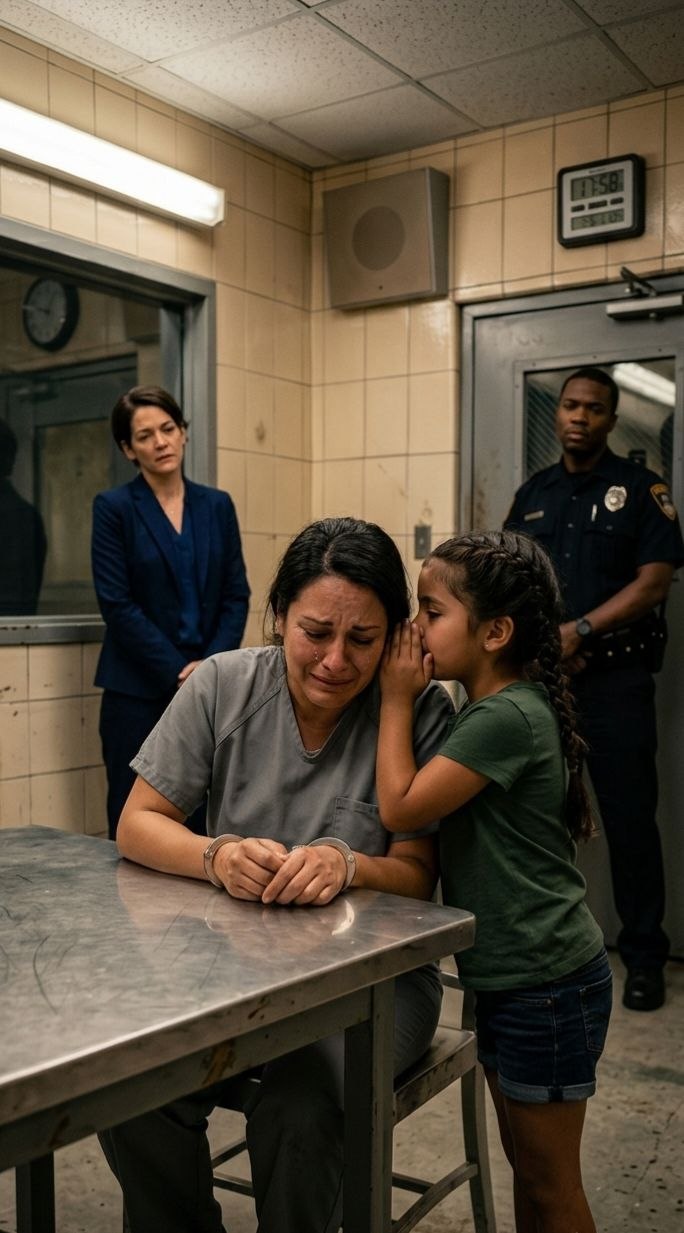
Salomé entered the room slowly. She was still a small child, but there was an unusual strength in her eyes—a strength that revealed how much she had endured in silence.
The moment mother and daughter looked at each other, everything else seemed to disappear.
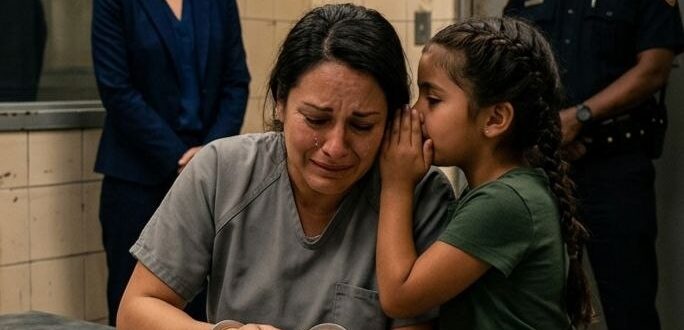
Ramira dropped to her knees and pulled her daughter into a desperate embrace. “I missed you,” she whispered, her voice breaking.
“I missed you too,” Salomé replied, sounding far older than her eight years. For a moment, neither of them spoke.
Then Salomé leaned closer and gently pressed her lips to her mother’s ear. “It wasn’t you,” she whispered. “I saw who did it.” Ramira froze.
For the first time in five years, someone was finally telling her that she wasn’t alone in knowing the truth. “The man with the snake-shaped watch,” Salomé continued.
“He came through the back door. You weren’t home.” Something inside Ramira cracked. Years of carrying the weight of an accusation she didn’t deserve suddenly came crashing down.
“Why didn’t you tell anyone?” she asked, barely able to speak. Salomé lowered her eyes.
“He saw me. He told me they would hurt you if I talked. And Aunt Clara said she already knew… She told me to forget what I had seen.” Clara.
The woman who had taken Salomé in after Ramira’s arrest. The same woman who had cried in court and insisted that Ramira was unstable and dangerous.
“Had you seen that man before?” Ramira asked. Salomé nodded. “Twice. Dad was afraid of him. He called him Becerra. That night, Dad said he wouldn’t sign anything.”
At the doorway, Colonel Méndez suddenly stopped. He hadn’t intended to overhear their conversation, but what he had just heard was impossible to ignore.
“Have you told anyone else?” he asked gently. Salomé shook her head. “Only Aunt Clara. She said it wasn’t real.” Méndez looked at the social worker, then back at the little girl.
Something inside him shifted. “Stop everything,” he ordered. “No one proceeds with the execution.” The case files were reopened.
Reports were examined again. Evidence that had once seemed insignificant suddenly took on a completely different meaning.
Buried among the old notes was a detail that had been dismissed years earlier: a little girl had repeatedly described a man wearing a distinctive watch.
This time, someone listened. When investigators placed several photographs in front of Salomé, she didn’t hesitate. “That’s him,” she said quietly. Héctor Becerra.
A respected lawyer. A trusted associate. A man who had sat in the courtroom throughout the trial, appearing as though he had nothing to hide.
The truth began to unravel quickly—not because the system had suddenly become perfect, but because this time, it could no longer ignore the evidence.
Becerra had been involved in a financial scheme with Ramira’s husband. When her husband refused to cooperate, the confrontation turned violent.
Clara arrived afterward. She accepted money to remain silent and helped create a story that made Ramira look guilty. For years, every piece of the false story seemed to fit perfectly. Until now.
Ramira wasn’t released immediately. There were procedures, investigations, legal reviews, and endless delays. After five years behind bars, every additional hour felt unbearable.
But something had changed. For the first time, there was hope. Thirty-eight days later, the prison gates finally opened.
Ramira stepped outside slowly, taking in the fresh air, the brightness of the sunlight, and a world that looked familiar yet strangely different.
Then she saw Salomé. The little girl ran straight into her mother’s arms and held on as tightly as she could, as though she were terrified of ever losing her again. “It’s over,” Salomé whispered.
“No,” Ramira replied softly, holding her close. “It’s only the beginning.” Freedom couldn’t erase the past.
It couldn’t return the years they had lost or undo the fear and silence that had shaped their lives. But it gave them something they had almost forgotten how to imagine:
A chance to rebuild. And Ramira finally understood what had truly changed everything.
It wasn’t only that the truth had been discovered. It was that, at the last possible moment, someone had finally found the courage to speak it.