I begged my parents for $5,000 to save my leg, but their response broke my heart.
Dad barely looked up before saying:
“We just bought a new boat.”
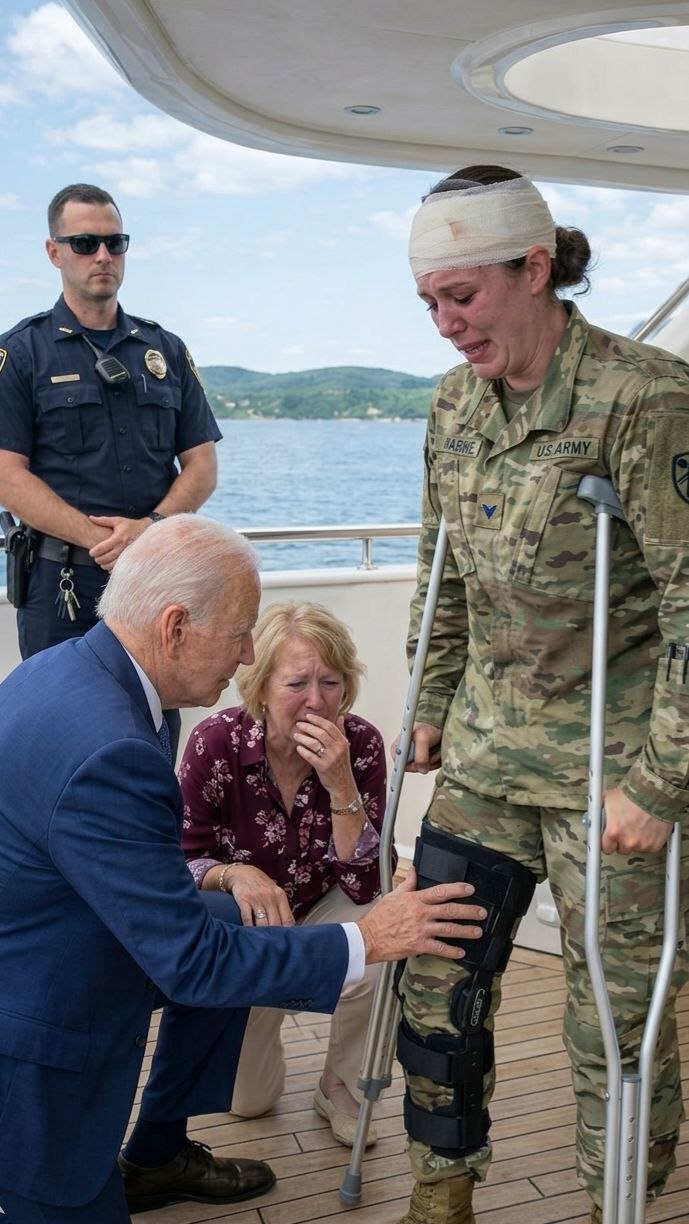
I was still wearing my military uniform when my father decided that my leg wasn’t worth $5,000.
It happened during a routine training exercise. One moment, I was moving with my unit.
The next, I heard a sharp crack inside my knee. A wave of intense pain rushed through my leg, and I collapsed to the ground.
At the clinic, the assistant showed me the scan without sugarcoating the truth. The damage was severe.
“You need surgery within a week,” she explained. “Otherwise, you may spend the rest of your life walking with a limp.”
The military medical system was moving too slowly, so she recommended getting the procedure done outside the base.
The cost: $5,000. That night, sitting alone in the barracks, I called home. I thought my parents would help me.
Instead, my father calmly said: “We just bought a boat.” My mother called it a “lesson.” My sister laughed and told me I would figure it out.
Something inside me went cold and silent. Two days later, I was sitting in my apartment on crutches when my brother arrived.
He barely made enough money to get by, but he placed $800 in wrinkled bills into my hand.
“I sold my tools,” he said. “I need you to be able to walk again.” My parents had everything and gave me nothing.
My brother had almost nothing… and still gave me everything.I went to a payday lender.
The office smelled like cheap coffee and desperate decisions. The interest rates were brutal, but I signed the papers. Two days later, I entered the operating room.
As the anesthesia took over, my father’s words echoed in my mind: “We just bought a boat.” When I woke up, my leg was surrounded by metal supports and wrapped in bandages. The surgeon smiled.
“We made it in time. You’ll walk normally again.” It was the best news I could have hoped for. But relief didn’t pay the bills.
My first payment was due in three days. My bank account had only $47. Then I remembered a lottery ticket I had bought on impulse.
I checked the numbers once. Then again. It wasn’t the grand prize. But it was enough. Enough to breathe. Enough to stop living in fear.
I didn’t tell anyone. Instead, I hired a lawyer. Inside his glass office downtown, I looked him in the eyes and said: “I want to protect my assets. And I want to understand my parents’ finances.”
The truth came out quickly. Their house was heavily refinanced. The boat wasn’t fully paid off. My sister’s business was losing money. Their taxes were a complete disaster.
The lawyer looked at me and said: “They’re not rich. They’re pretending to be.” They refused to give me $5,000 for a surgery that would save my ability to walk, while spending tens of thousands to maintain an image.
So I built a company. Quiet. Clean. Anonymous. Through that company, I purchased their debts for far less than their actual value.
Within forty-eight hours, I went from being the daughter they ignored… to the person who controlled their house, their loans, and their financial future.
They didn’t know. They believed a “lucky opportunity” had appeared. And it had. The contract was fifty pages long. Hidden inside was one important clause:
A single missed payment meant immediate cancellation and transfer of ownership. No extensions. No exceptions. They didn’t read it carefully.
When they signed, something inside me finally became calm. That night, I stood up without my crutches. My leg held. I wasn’t limping anymore.
For the first time in months, I smiled. From the outside, nothing changed. My parents bragged about their “financial restructuring.” My sister posted champagne photos online, talking about success and abundance.
They had no idea they were only tenants now. While I rebuilt my body, I studied every detail of their finances. Because when you own the debt, fear becomes control.
And I knew exactly how fragile their world was. Then Thanksgiving arrived. They celebrated loudly inside a house that belonged to me, using money I controlled.
My sister raised her glass. “To partners who recognize our value.” I stayed silent.
Three weeks later, the first mistake happened. A payment was delayed by only a few hours. The system didn’t accept excuses. At 12:01 a.m., the contract was terminated. By morning, official notices had arrived.
The intermediary called a meeting. My parents entered the room furious. My father demanded to meet the main investor. I turned my chair around.
For a moment, they didn’t recognize me. Then the color drained from their faces. “Hello, Mom. Hello, Dad,” I said. “I’m the owner.” There were screams. Tears. Accusations. “You deceived us,” my mother whispered.
“No,” I replied. “You signed the agreement.” When my father threatened me, I calmly placed a document on the table. “That has already been reported.” Silence.
Outside, the air felt clean. I stood firmly on both feet and called my brother. “Pack your things,” I said. “I bought the workshop.” When my parents returned home, they couldn’t get inside.
The locks had already been changed.The process was quiet. And final. My mother called first.She cried. She talked about family and misunderstandings. But she never said the one thing I wanted to hear:
“I’m sorry.”My father called afterward. Pure anger. He threatened lawsuits, then bragged about hidden money. When he finished, I calmly said: “I know. That’s why I filed the report.”
The line went silent. Two hours later, my lawyer sent me a message: “The investigators are there.” For the first time, I felt relief.
My sister came to my door later. The same way she always did when she needed something. “You didn’t have to take it this far,” she said. I looked at her.
“Like when you all refused to give me $5,000 for surgery?” She had no answer. She left. That night, I walked without crutches.
Every step was one I had fought for.I thought about my brother, now the owner of his own workshop. And I finally understood:
Family is not just the people who share your blood. It’s the people who refuse to let you suffer alone.
Their downfall was quiet. Frozen accounts. Investigations. A world built on appearances collapsing piece by piece.
I didn’t feel victorious. I felt free. I didn’t destroy them. I simply stopped protecting them from the consequences of their own choices. I returned to service.
During therapy, my doctor smiled. “You walk like someone who trusts herself again.” “I do.”
One evening, my brother told me our parents had stood outside his workshop for a while before leaving.
“I told them it wasn’t theirs anymore,” he said. Later, my mother sent a letter asking for forgiveness. But I already knew the truth. They chose comfort over compassion.
A boat over my ability to walk. At our final meeting, my father looked at me and said: “You didn’t have to ruin us.” I looked him in the eyes. “I didn’t ruin you.”
“I just stopped saving you.” Outside, the leaves cracked beneath my feet as I walked away. Standing tall. Whole again. Knowing I had gone exactly as far as I needed to go.