After I Slapped My Wife Twice, She Refused to Return to My Parents’ House for Eight Years
“It means we need to prepare for significant long-term complications.”
The doctor pointed to the scan.
“The stroke has affected areas of the brain responsible for movement.
She has paralysis on her left side, along with difficulty speaking and swallowing. At this stage, it’s too early to know how much function she will regain.”
For the next four days, I practically lived at the hospital. I took time off work, slept in a chair whenever I could, and spent hours speaking with doctors and nurses. Ryan would show up for a few hours and then leave.
“I have things to take care of—the kids, work. Lauren is on her own.” “So do I. I have a job and a daughter to take care of.” “Yeah, but you’re the older brother.”
Those words again. Ever since I was a child, being “the oldest” had meant that I was expected to sacrifice, take responsibility, and handle whatever needed to be handled.
Funny how that responsibility always seemed to disappear whenever money was involved. But none of that mattered to me then.
All I cared about was my mother. One afternoon, she began coughing while a nurse was helping her drink some water.
That was when I thought of Emily. My wife had been a nurse for nearly twenty years. I called her.
“Mom suffered a stroke. She’s going to need rehabilitation and probably care at home. You know how to handle these things. I was wondering if maybe you could…”
I stopped. The moment the words left my mouth, I realized what I was asking.
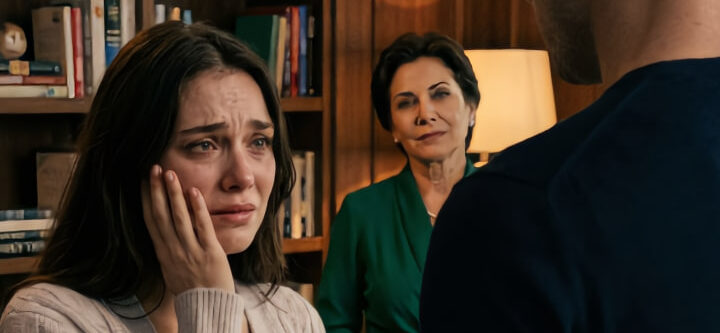
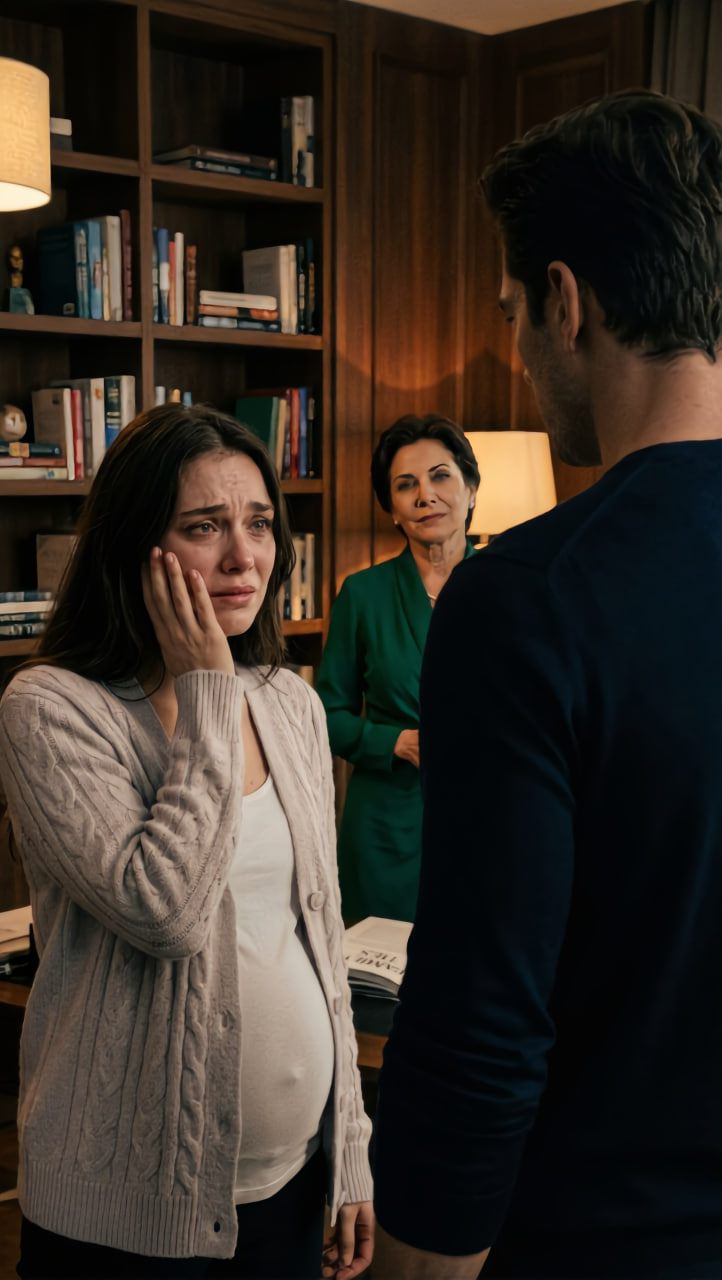
Eight years earlier, my mother had watched me hit Emily and encouraged me. Then she had told Emily never to come back.
And now I was asking Emily to take care of the very woman who had humiliated her. “You want me to take care of your mother?” Emily asked.
“Just until she’s stable.” “No, Mark. I can teach you how to care for her, but I won’t be her caregiver.”
I felt anger rising inside me. “I thought that after all these years, you would have moved past what happened.” Her voice immediately became colder.
“You still think it was just a couple of slaps. That day, I realized exactly where I stood in your family.”Then she told me something that left me speechless.
“I was nine weeks pregnant.” “What?” “I never told you. I wanted to wait until the first ultrasound.” Suddenly, I remembered.
Three days after that terrible night, I had come home without even asking how she was feeling. The only thing I had said was: “Mom is still angry.” Emily continued.
“You asked me when I was going to apologize to her. I stayed because I loved you. But I promised myself I would never again allow your family to mistreat me while you stood on their side.”
I swallowed hard. “What were you waiting for all these years?” “Not an apology from your mother. An apology from you.”
Her words hit me harder than anything else could have. For years, I had said things like, “That was a long time ago,” “You need to get over it,” and “Just do it for me.”
I had never said the words that actually mattered:“What I did was wrong. It wasn’t your fault. I should have protected you.”
Every apology I had ever given came with an excuse attached. “Emily…” “When you come home, we’ll talk.”
That evening, I confronted my father. “Why didn’t you say anything when I hit her?” He stared down at his coffee. “Because I was a coward. I should have stopped you. I should have stood up to your mother.”
For the first time, I realized how much I had become just like him. A week later, my mother was out of immediate danger, but she still needed intensive rehabilitation and constant care.
Ryan immediately started complaining about the cost. “I can’t pay half.” “Neither can I pay for everything myself.” “I have a mortgage and two kids.”
“I have a daughter too.” In the end, I paid the initial deposit.
Later, when Lauren suggested that Emily could take care of my mother because she was a nurse, I felt ashamed. “But she’s family,” Lauren argued.
I looked at her. “That’s exactly why she won’t do it. Not after the way we treated her.” For the first time, I said it without trying to soften it or make excuses.
“I hit her. Mom encouraged me. Ryan laughed. Dad looked the other way. And somehow, we were the ones who called Emily difficult.”
Two weeks later, my mother was transferred to a rehabilitation facility.
Emily never came to the hospital. But she helped me from a distance, explaining medical reports and answering questions whenever I needed guidance.
She helped without crossing the boundary she had set. For the first time in my life, I understood that a boundary wasn’t something I had the right to negotiate.
I had to respect it.One Sunday, my daughter Sophie asked me:“Dad, why doesn’t Mom ever come with us?” This time, I told her the truth.
“Because I did something very wrong years ago. I hit your mother.”“Was Grandma there?”“Yes.”“Did she stop you?” “No.” “Did you apologize?”I lowered my eyes.
“Not the way I should have.” That night, I talked to Emily.
“I failed you. My mother humiliated you for years, and I chose comfort instead of standing up for you. That day, I hit you because I chose to do it. There is no excuse for that.” I took a deep breath.
“I’m sorry I made you feel alone inside our marriage. I’m sorry I protected my mother’s peace instead of your dignity. And I’m sorry it took eight years and a tragedy for me to finally understand.”
I didn’t ask her to come back. I didn’t ask her to forget. I didn’t even ask her to forgive me. Emily was silent for several seconds.
“That’s what I’ve been waiting to hear.” There was no miraculous reconciliation that night. But something changed.
The following months were difficult.
My mother regained some movement, although her left arm remained almost completely paralyzed. Ryan and I argued repeatedly over the expenses until he eventually sold his second car.
When my mother was finally discharged, Ryan suggested bringing her to my house. I immediately refused.
“No. This is Emily’s home too. I’m not going to force her to live with someone who spent years humiliating her.” We hired a caregiver and divided the overnight shifts between us.
Six months later, my mother finally asked me: “Does she hate me?” “I don’t think so.” “She never comes.” “No.”
Her eyes filled with tears. “Because of me?” “Partly. Because of me too.” Then she finally confessed something she had never admitted before. “I told you to hit her.”
It was the first time she had openly spoken about that night.
“I believed a wife was supposed to obey her husband. I was raised to think that way. My father used to hit me too, and I ended up repeating the same pattern.”
It wasn’t an excuse. But for the first time, I understood how violence can become a cycle until someone finally chooses to break it.
“I want to see her,” my mother said. “You can ask her. But I won’t ask her to come.” That evening, I spoke to Emily.
“Mom wants to see you. I only promised that I would ask. If you say no, I won’t bring it up again.” “What does she want?” “I think she wants to apologize.”
“She can call me or write me a letter.” Almost two months passed. Then, one afternoon, Emily surprised me. “On Saturday, we’ll go see your mother.” We arrived together.
Emily stood silently in front of the same door she had closed eight years earlier. “We can leave,” I said. “No.” She took Sophie’s hand and walked inside.
My mother immediately began to cry. “I’m sorry,” she whispered. Emily looked at her. “For what?” My mother lowered her head.
“I treated you like a servant. I told Mark to hit you, and I was glad when he did. I humiliated you and made you feel worthless. I thought I had the right to treat you that way.”
She slowly extended her hand. “I didn’t.” Emily was crying. “I never wanted you to become sick,” she said. “But I couldn’t come back and pretend none of it had happened.”
“I understand.”Emily took her hand. It wasn’t a hug. It didn’t erase the past. It didn’t mean everything was suddenly forgiven.
It was simply the first sign that the door she had closed eight years earlier was no longer completely shut. On the drive home, Sophie asked:
“So… is everything okay now?” Emily looked out the window. “Not everything. But it’s better.”
That was when I finally understood something that had taken me years to learn. Forgiveness doesn’t mean forgetting.
An apology doesn’t erase consequences. And setting boundaries doesn’t mean you hate someone. For years, I had called Emily bitter because she refused to return to my parents’ house.
The truth was much simpler. She refused to return to a family that wanted her presence without ever acknowledging the pain they had caused her.
Today, more than ten years have passed.
Emily visits my parents a few times a year. Only when she wants to. Never because she feels obligated. One night, I asked her: “Do you regret waiting eight years?” She shook her head.
“No. If I had come back sooner, everyone would have learned that they could mistreat me and I would eventually return anyway.” I took her hand.
“Thank you for not giving up on our marriage.”She smiled. “I almost did.”“Why didn’t you?”
“Because outside of your family, you were different. I knew there was something good in you. I just didn’t know whether you would ever have the courage to admit that what you called ‘normal’ was actually wrong.”
“I took too long.” “Yes.”She squeezed my hand. “But you got there.” Now I understand that I had no right to force her to return, demand her forgiveness, or decide when she should heal.
The only things I could do were change, take responsibility, acknowledge what I had done, and wait.
Some mistakes take only seconds to make. Understanding why they were wrong can take years. It took me eight.
And I was lucky. Because when I finally learned the lesson, the woman I had hurt was still there to see me become a better man.