My Mother-in-Law Crossed the Line When She Threw My Daughter’s Birthday Cake on the Floor.
“No Grandson, No Reason to Celebrate,” She Declared.
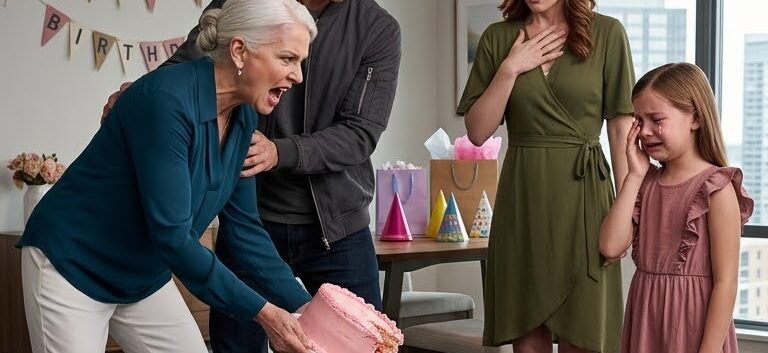
When my mother-in-law slapped my ten-year-old daughter, Emma, and hurled her birthday cake onto the floor, she sneered, “No son, no celebration.”
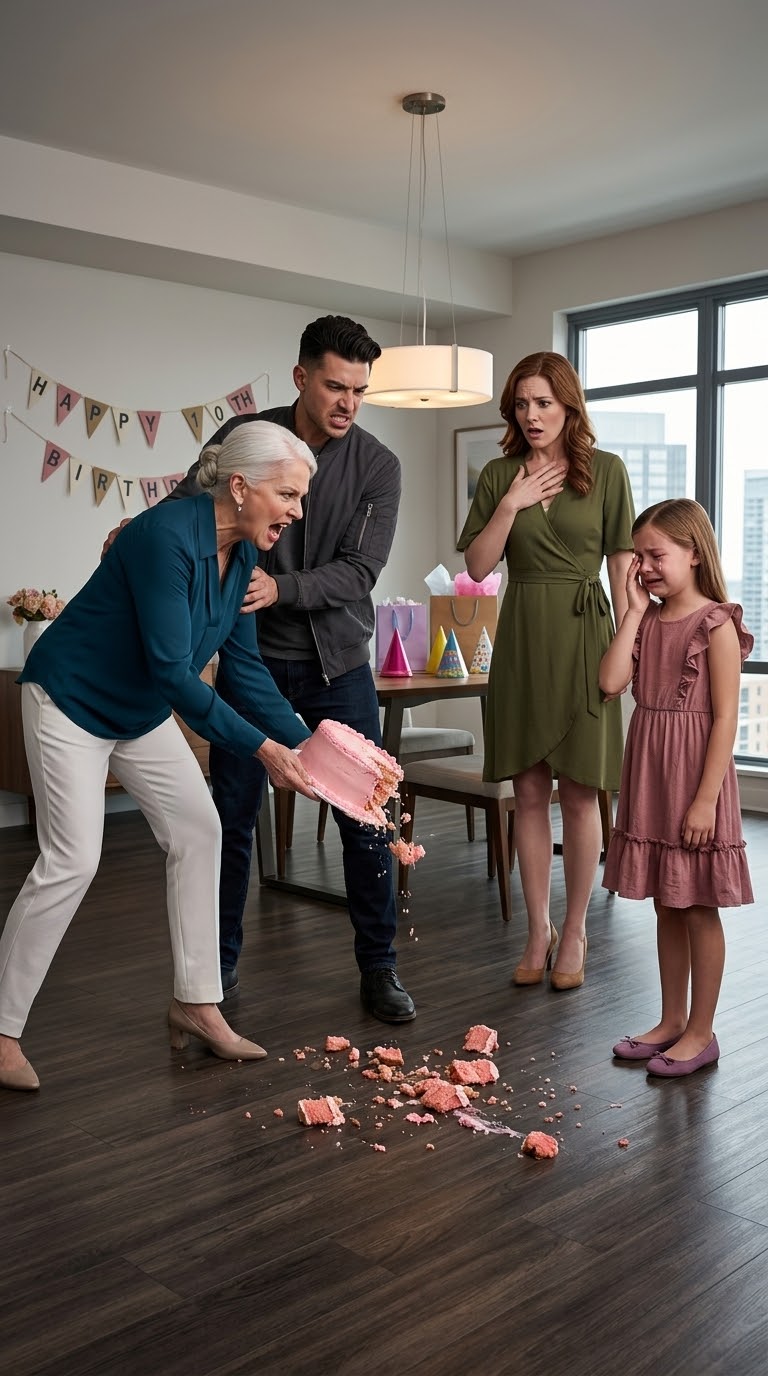
But the cruelest part wasn’t what she did. It was watching my husband, Mark, stand beside her and agree.
I didn’t scream or argue. I simply looked at them and said, “Okay.” They mistook my silence for surrender. That was their first mistake.
For years, my mother-in-law, Diane, had made no secret of her desire for a grandson.
She constantly belittled our daughters, and Mark always defended her with the same tired excuse: “That’s just how Mom is.”
But Emma was ten now. She understood exactly why her grandmother had humiliated her, and she had seen her own father choose sides.
I took my daughters to my sister’s house and called my attorney.
I had already been considering divorce after discovering that Mark had secretly transferred $38,000 from our joint savings into an account under his control.
His betrayal had shaken me, but watching him abandon our daughter when she needed him most made my decision final.
The following morning, I filed for divorce.
Mark’s confidence began crumbling when he learned that the house he proudly called his was actually mine, held in a trust established by my grandmother.
Then came another shock: I owned the commercial property where his landscaping business operated.
His lease was nearing its expiration date, and he had previously rejected my offer to renew it.
Suddenly, the future he had taken for granted looked very different.
“You’re ruining my life!” he accused me. I met his gaze without flinching.
“No, Mark. This isn’t about your mother. It’s about you. When she slapped our daughter, you chose to stand beside her instead of protecting Emma.”
Meanwhile, Diane tried to convince our relatives that I was a bitter, vindictive wife seeking revenge. But her own words betrayed her.
She eventually admitted that she had slapped Emma after the child asked what had happened to her birthday cake.
Several family members also came forward to confirm what they had witnessed.
The court issued a temporary order restricting Diane’s contact with the girls, while Mark was granted regular parenting time.
Emma refused to see her father for a while.
She simply couldn’t understand how the person who was supposed to protect her could stand by while someone hurt her.
Our divorce proceedings lasted eleven months.
Eventually, Mark began attending counseling and confronting his behavior. During one session, he finally apologized to Emma.
“I was wrong,” he told her. “Grandma hurt you, and I should have protected you. You deserved better from me.”
Emma listened, but she didn’t immediately forgive him. An apology couldn’t erase what had happened. If he wanted to rebuild their relationship, he would have to earn her trust.
A year after that terrible birthday, we celebrated Emma’s eleventh birthday at home.
There was a chocolate cake, colorful balloons, and a small gathering of people who genuinely loved her. Diane wasn’t invited.
Later that evening, Emma curled up beside me on the couch.
“Mom, do you remember when you said ‘Okay’ last year?” “Of course I do.” “I thought you were agreeing with Grandma.”
“I understand why you thought that.” She was quiet for a moment before resting her head against my shoulder.
“But then you took us away from there.” I kissed the top of her head.
She looked up at me and whispered, “I want to be like you.” I smiled gently. “Why, sweetheart?”
“Because you were scared, but you still walked away.” Her words brought tears to my eyes.
That was when I understood what my quiet response had truly meant.
It hadn’t been surrender. It hadn’t been weakness.
It was the moment I stopped trying to convince people to treat my children with love and respect—and started protecting them from those who wouldn’t.
Sometimes, the strongest response isn’t a furious argument or a desperate plea. Sometimes, it’s one calm, decisive word: “Okay.”